Fall changes Yellowstone. The crowds that fill the loop roads all summer thin out, the light turns gold and low, and the animals, no longer hiding from midday heat, start moving into the open. If you want to actually see wildlife in Yellowstone, rather than glimpse it from a passing car, fall is one of the two best windows of the year to do it.
Here’s what’s happening out there this season, and where a guide would point your spotting scope.


Why Fall Is a Prime Wildlife-Watching Season
Cooling temperatures push animals into daylight activity instead of retreating to shade or higher elevation. At the same time, every species in the park is on a biological clock. Elk are competing to breed, bears are racing to gain weight, and wolves are testing pups that are nearly grown. That urgency translates directly into more visible behavior for anyone watching from a safe distance.

The Elk Rut: Yellowstone’s Loudest Fall Spectacle
Starting in September, bull elk begin bugling… a rising, almost eerie call that carries for miles across the valleys. The rut typically peaks from mid-September into early October, when bulls gather harems of cows and spar with rivals, antlers locking in brief, dramatic contests. Mammoth Hot Springs is one of the most reliable places to hear and see this up close, since resident elk herds gather right around the historic terraces.


Bears in Hyperphagia: Racing the Clock Before Winter
By late August and into September, both grizzly and black bears shift into hyperphagia, a state of near-constant eating aimed at packing on fat before hibernation. Grizzlies key in on carcasses, moth aggregations, and whitebark pine nuts; black bears work over berry patches and ant colonies. Because they’re burning so much time foraging, bears become more active during daylight hours in fall than they are in the heat of midsummer, which, paradoxically, makes them somewhat easier to spot from a safe distance.
Wolves on the Move as Fall Deepens
Wolves don’t hibernate, but fall still marks a shift. Pups born in the spring are nearly full-grown by September and October, and packs begin ranging farther as pups start learning to hunt alongside adults. Pack activity and territorial disputes over resources pick up as winter approaches. Fall is essentially the warm-up act for what becomes Yellowstone’s best wolf-watching season once snow arrives.

Where to Look: Fall Wildlife Hotspots
- Lamar Valley — Often called the “American Serengeti,” this is the most consistent wildlife corridor in the park in any season, and fall is no exception: bison, elk, pronghorn, and wolves all move through here, most visibly at dawn and dusk.
- Hayden Valley — A close second to Lamar for bison and elk, with grizzlies and wolves also showing up in the cooler morning and evening hours.
- Mammoth Hot Springs & Blacktail Plateau Drive — Mammoth’s resident elk herd is the most reliable rut-viewing spot in the park; Blacktail’s quieter dirt road (when open) is a good bet for bison, elk, and the occasional black bear away from the main road traffic.


Fall Wildlife Viewing Tips
Time it right. Early morning and the last hour before dusk are consistently the most active windows.
Dress in layers. Fall temperatures in the park can swing from 30s and 70s in September down toward freezing by November, sometimes within the same day.
Keep your distance. Stay at least 100 yards from bears and wolves, 25 yards from everything else. Fall’s heightened animal activity (rut aggression, bears in a feeding frenzy) makes this more important, not less.
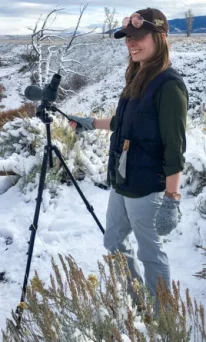
Bring real optics. A lot of fall wildlife viewing happens at real distance across open valleys; binoculars or a spotting scope make the difference between a shape on a hillside and an actual sighting. Our guided tours provide high quality optics- binoculars for each guest to use and several high-powered spotting scopes for extra magnification.

See Fall Wildlife With a Naturalist Guide
A guide’s real value in fall isn’t just knowledge, it’s knowing where the elk have been bugling this week, which drainage the wolves have been using, and which overlook still has bears working the hillside. Our naturalist guides track these patterns daily throughout the season on our Yellowstone Wildlife Safari, which runs year round, departing early to capture that prime window for wildlife activity.
FAQs
What wildlife can you see in Yellowstone in the fall?
Fall highlights include the elk rut, grizzly and black bears in hyperphagia, increasingly active wolf packs, bison, and migrating raptors. Cooler weather pushes animals into more daylight activity than in midsummer, and September through November are widely considered among the best wildlife-viewing months in the park.
When does the elk rut happen in Yellowstone?
The elk rut typically runs from September through early October, peaking in mid-to-late September.
Is fall a good time to see bears in Yellowstone?
Yes. Starting in late August, bears enter hyperphagia — a period of intense feeding before hibernation — which keeps them active for longer stretches of daylight than in summer, improving the odds of a sighting, especially in Lamar and Hayden Valleys.
What's the best time of day for fall wildlife viewing in Yellowstone?
Early morning and the hour before dusk are the most reliable windows, since cooler fall temperatures allow animals to be active for longer periods of time than the summer heat allows.
Are wolves easier to see in Yellowstone in the fall?
Fall wolf activity increases as nearly grown pups begin ranging and hunting with the pack, though wolves are typically even more visible once snow arrives in winter. Lamar Valley remains the most consistent spot for fall wolf sightings.
Wildlife Safari
Keep Exploring