When the snow arrives, most of Yellowstone goes quiet. Entrance gates close, the Grand Loop disappears under several feet of powder, and the park’s interior becomes the territory of snowcoaches and snowmobiles. But one corner of the park stays open to anyone with a car, and it happens to be the best winter wildlife country in the Lower 48. That corner starts in Gardiner, Montana.
If you’re thinking about a winter trip through Yellowstone’s North Entrance, here’s what’s open, where to stay, and how a guided day in the park actually works.


Is Yellowstone’s North Entrance Open in Winter?
The one road that stays open
Each year, Yellowstone closes its West, South, and East entrances, plus nearly every interior road, on November 1. For 2026, October 31 was the last day to drive this area of the park.
The exception is the Northern Range road. It runs from the Roosevelt Arch in Gardiner up to Mammoth Hot Springs, east across the Blacktail Plateau to Tower Junction, through Lamar Valley, and out the Northeast Entrance to the tiny communities of Silver Gate and Cooke City. The park plows it all winter, weather permitting.
What you can’t reach by car
That road is a dead end. East of Cooke City, the Beartooth Highway is closed to vehicles from late fall to spring, so there’s no loop and no shortcut to Cody or Red Lodge. Whatever you drive in, you drive back out.
You also can’t drive to Old Faithful, Norris, Canyon, or Yellowstone Lake. Those areas open to guided oversnow travel starting December 15 and are reachable only by snowcoach or snowmobile. Plan on Gardiner (or Mammoth) as an out-and-back base.

What’s Along the Gardiner-to-Cooke City Road
This stretch is famous among wildlife watchers for a reason. Elk, bison, and bighorn sheep move to lower, wind-scoured ground for winter, and the predators follow.
- Mammoth Hot Springs: Steaming travertine terraces, elk bedded on the lawns of historic Fort Yellowstone, and the park’s only year-round visitor center.
- Blacktail Plateau: Open sagebrush country where bison and elk often feed close to the road.
- Tower Junction: The halfway point and a reliable spot for bighorn sheep on the cliffs above the Yellowstone River.
- Lamar Valley: The heart of winter wolf watching. Wolves are easier to spot against snow, and packs often hunt in the open.
- Soda Butte and Cooke City: Moose habitat near the Northeast Entrance, and a snowbound mountain town at the end of the road.
Note that grizzly and black bears are hibernating in winter, so don’t count on them.


Where to Stay in Gardiner in Winter
Lodging is the first thing to lock in. Available options shrink after summer, and the best-located rooms book early for holiday weeks and February.
Mammoth Hot Springs Hotel
Mammoth Hot Springs Hotel is the only in-park lodging you can drive to in winter. For the 2026–27 season it stays open from late April straight through to March 8, 2027, with winter activities starting December 15. Standard cabins close for winter, but the hot tub cabins can be booked year-round. The dining room serves breakfast, lunch, and dinner, and dinner reservations are required.
In-town lodging in Gardiner
Gardiner has fewer than 900 year-round residents, but a solid handful of motels, inns, cabins, and vacation rentals stay open through winter. Staying in town puts you five minutes from the Roosevelt Arch, which matters when the best wildlife activity happens at first light. Ask any property whether it’s fully open or running limited winter service, since some keep only part of their rooms available.
Paradise Valley and Cooke City
North of Gardiner, Paradise Valley offers more spread-out lodging with mountain views, including properties near the hot springs at Corwin Springs and historic Chico Hot Springs about 30 miles north. At the other end of the road, Cooke City and Silver Gate have a small number of winter rooms and put you right at the edge of Lamar Valley, though services there are thinner.

What’s Open in Gardiner in Winter
Gardiner in winter is a working town, not a resort. Expect shorter hours, a few seasonal closures, and a lot of friendly locals.
Food and coffee
Several restaurants serve year-round, though many shift to reduced winter hours. Cowboy’s Lodge & Grille, Wonderland Café & Lodge, and Yellowstone Grill (breakfast and lunch) have historically operated through winter. Call ahead, especially early in the week. If you’re in town in December, the Gardiner Christmas Stroll and tree lighting is a small-town highlight, and January brings a community chili cook-off.
Hot springs, skiing, and snowshoeing
Yellowstone Hot Springs, about eight miles north of town, stays open in winter with reduced weekly hours. Chico Hot Springs are located a little farther, 30 miles from Gardiner. The Forest Service maintains the Bear Creek ski trails near Gardiner for cross-country skiing and snowshoeing, and several trailheads along the park road open up easy winter walks.
Services inside the park at Mammoth
At Mammoth Hot Springs, the Albright Visitor Center, general store, post office, and medical clinic stay open year-round, and there’s 24-hour self-service fuel at Mammoth and Tower Junction. Cell service is spotty east of Mammoth, so download offline maps before you go.


How Winter Tours Run from Gardiner
Driving the Northern Range in winter is doable, but the road can be icy and narrow, pullouts get buried, and the hardest part isn’t the driving at all. It’s knowing where to look. That’s where a guide are invaluable!
A typical winter safari day
Our Yellowstone Winter Wildlife Safari runs November through April on exactly this corridor, from Mammoth to Cooke City. Public tours meet at a central point in Gardiner (or Bozeman), and private tours offer hotel pickup in Gardiner around 8:30 a.m. or at Mammoth around 8:45 a.m. The park portion of the day runs roughly six to seven hours.
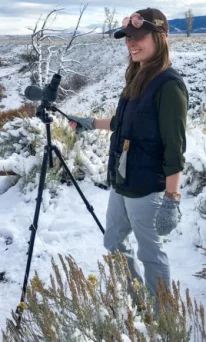
Your naturalist guide reads the morning’s sightings, stays in touch with the network of wolf watchers, and adjusts the route to where animals are moving. Professional spotting scopes and binoculars, a catered picnic lunch, and hot drinks are included, so all you need to bring is warm layers.
Want more time on the wolves? The 3-Day Winter Wolves and Wildlife Safari gives you multiple dawns in Lamar Valley. Prefer to get out of the vehicle? The Yellowstone Snowshoe Safari departs from Gardiner.

Gardiner Winter Trip Checklist
- Fly into Bozeman (BZN). Gardiner is about 1.5 hours south, much of it through Paradise Valley.
- Book lodging early. Holiday weeks and February fill first, in town and at Mammoth.
- Plan an out-and-back. The road ends at Cooke City, and the interior is snowcoach-only.
- Pack for single digits. Base layer, insulated mid-layer, windproof shell, insulated boots, and goggles or sunglasses for snow glare.
- Go early. Wildlife is most active at dawn, and winter daylight is short.
- Book a guide for Lamar Valley. Local knowledge, optics, and someone else handling the icy pullouts.
Winter is the season most visitors never see, and the Northern Range is the one place you can roll right into it. Ready to go? Book your Yellowstone Winter Wildlife Safari and let us show you Lamar Valley at its wildest.
FAQs
Is Yellowstone's North Entrance open in winter?
Yes. The North Entrance at Gardiner, Montana is open to regular vehicles year-round, weather permitting. From early November to mid-April, the road from Gardiner through Mammoth Hot Springs, Tower Junction, and Lamar Valley to Cooke City is the only road in Yellowstone open to cars. All other park roads are closed to wheeled vehicles and open only to snowcoaches and snowmobiles from mid-December.
Can you drive from Gardiner to Old Faithful in winter?
No. The road from Mammoth Hot Springs south to Norris and Old Faithful is closed to cars in winter. To reach Old Faithful, you’ll need a guided snowcoach or snowmobile tour. Snowcoach transportation between Mammoth Hot Springs Hotel and Old Faithful Snow Lodge is available in winter with advance reservations.
Is the road from Gardiner to Cooke City open all winter?
Yes, the park plows the road from Gardiner to Cooke City all winter, weather permitting. It’s a dead end, though: the Beartooth Highway east of Cooke City is closed to vehicles from late fall to spring, so you’ll return the way you came. Conditions can be icy, so check the NPS road status line before heading out.
Where should I stay in Gardiner in winter?
Mammoth Hot Springs Hotel is the only in-park lodging you can drive to in winter and puts you right on the Northern Range. In Gardiner itself, several motels, inns, and vacation rentals stay open year-round, often with limited winter service. Paradise Valley to the north and Cooke City to the east are quieter alternatives. Book early for holidays and February.
Can you see wolves in Yellowstone in winter from Gardiner?
Yes. Winter is one of the best seasons to see wolves, and Lamar Valley, reachable by car from Gardiner, is the park’s top wolf-watching area. Wolves stand out against the snow and often hunt elk and bison in the open. A guided wildlife safari with spotting scopes greatly improves your odds, since guides track where packs have been seen that morning.
Wildlife Safari
Keep Exploring