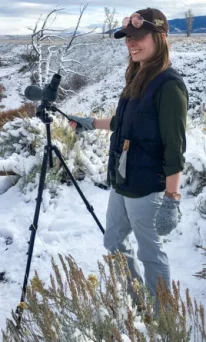
Stargazing tours from Big Sky offer access to some of the clearest and darkest night skies in the United States. Located near Yellowstone National Park and surrounded by vast protected landscapes, this region provides exceptional conditions for observing celestial features with minimal interference from artificial light. Big Sky is the perfect place to experience the natural beauty of an untouched, wild night sky while still enjoying the benefits of a populated(? Would love a better word here if you have ideas) mountain town.
At night, the mountain scenery of Big Sky transforms. Mountains fade into silhouette, temperatures cool, and the sky unfurls into a star-studded tapestry. For many visitors, this transition reveals a level of clarity and depth that is invisible in urban areas.
A guided stargazing tour enhances this experience into something truly magical. By combining optimal viewing locations with expert interpretation, guests understand not just what they are seeing, but how the world above our heads connects to the one below our feet.


Why Big Sky Is Ideal for Stargazing
Low Light Pollution
One of the defining advantages of Big Sky is the absence of significant artificial light. With limited development and strong land conservation, the region maintains a natural darkness that allows stars to appear brighter and more numerous. The mountains themselves enhance this effect, blocking light from developed areas and creating pockets of true darkness.
In these conditions, even faint stars become visible, and the night sky takes on a layered appearance filled with depth and detail. This level of visibility is difficult to replicate in more populated areas and is a key reason why Big Sky is considered a premier stargazing destination.
High Elevation and Clear Air
Big Sky’s elevation contributes to thinner atmosphere and reduced distortion, which improves overall clarity when viewing celestial objects. Combined with low humidity and dry air, this creates ideal conditions for sharp and stable observations of otherwise elusive deep space objects like star clusters, nebulae, and galaxies.
On clear nights, stars appear more defined, and subtle details in the night sky become easier to distinguish. These conditions are especially beneficial for viewing the Milky Way and other features that are typically difficult to see.

What You Can See on Stargazing Tours
Milky Way — Summer
The Milky Way is one of the most striking features visible from Big Sky. Under dark sky conditions, it appears as a dense band of stars and dust stretching across the sky, with visible structure and variation.
You can expect to see:
- Bright core regions with dense star clusters
- Subtle color variations and dark dust lanes
- Expansive visibility across the night sky
During peak visibility, the Milky Way becomes the centerpiece of the experience and offers one of the most memorable sights for visitors. For best viewing conditions, stargaze on moonless nights in the heart of summer.
Constellations and Planets — Year Round
Guided tours provide the opportunity to identify constellations and understand how they change throughout the year. Without guidance, many of these patterns can be difficult to recognize.
- Seasonal constellations shift with Earth’s position
- Planets appear brighter and more stable than stars
- Familiar patterns and celestial navigation techniques become possible to identify with explanation
Learning to navigate the night sky adds a deeper layer to the experience and creates a lasting connection to what is being observed.
Meteor Showers and Seasonal Events — Year Round
Throughout the year, the night sky offers additional phenomena such as meteor showers and planetary alignments. These events vary in timing and intensity but can add excitement and unpredictability to a stargazing tour. Some events you might experience include:
- Shooting stars during meteor showers, such as the Perseids in August
- Occasional planetary alignments
- Visible satellites such as the International Space Station moving across the sky
These moments often occur unexpectedly and can become highlights of the experience.


What to Expect on a Stargazing Tour
- Travel to a carefully selected dark sky location away from artificial light
- A gradual transition into darkness as eyes adjust to night conditions
- Use of binoculars or telescopes to enhance visibility of distant objects
- Guided interpretation that explains celestial movement and patterns
- Time for quiet observation, photography, and questions
The pace of the experience is intentionally unhurried, allowing guests to fully take in the night sky and observe details that may not be immediately apparent.

Best Time for Stargazing in Big Sky
- Summer
- Warmer nighttime temperatures
- Strong visibility of the Milky Way
- Comfortable conditions for extended viewing
- Fall
- Crisp air and reduced atmospheric haze
- Fewer visitors and quieter surroundings
- Excellent clarity and contrast in the night sky
- Winter
- Long nights provide extended viewing time
- Extremely clear atmospheric conditions
- Cold temperatures require proper preparation
Each season offers a slightly different experience, but clear nights can provide excellent viewing conditions year-round.


Tips for the Best Stargazing Experience
- Dress warmly, as temperatures drop significantly after sunset.
- Allow at least 20 to 30 minutes for your eyes to fully adjust to darkness.
- Avoid using bright screens or flashlights that disrupt night vision.
- Bring a camera capable of long exposures for night photography.
- Be patient and take time to observe subtle details in the sky.
These small adjustments can significantly improve both visibility and overall enjoyment.

Why Choose a Guided Stargazing Tour
A guided stargazing tour provides structure and insight that are difficult to achieve independently. While the night sky is visible to anyone, specialized equipment helps you see much farther and clearer, and understanding what you are seeing requires knowledge of astronomy and seasonal patterns.
Naturalist guides help identify key features, explain celestial movement, and answer questions in real time. They also select locations based on current conditions, ensuring the best possible viewing experience.
This combination of expertise and access allows guests to engage with the night sky in a more meaningful and memorable way.


Plan Your Stargazing Experience from Big Sky
Stargazing tours from Big Sky offer a unique opportunity to experience the natural world beyond daylight hours. The transition from landscape to sky creates a sense of scale and perspective that is difficult to replicate during the day.
Yellowstone Safari Company offers guided stargazing experiences designed to provide access to optimal viewing locations and in-depth interpretation of celestial features.
Whether you are new to astronomy or simply looking for a different way to experience the region, planning ahead ensures the best conditions and availability for your tour.
FAQs
Are there stargazing tours from Big Sky?
Yes. Yellowstone Safari offers guided stargazing tours from Big Sky that take advantage of dark skies and minimal light pollution.
What can you see on a stargazing tour in Big Sky?
You can see the Milky Way, constellations, planets, and seasonal events such as meteor showers. Visibility of certain objects such as the Milky Way varies with the season; be sure to ask when booking your tour about what you will see during the experience.
When is the best time for stargazing in Big Sky?
Summer and fall provide especially excellent conditions, though clear nights throughout the year can offer great visibility. Winter is colder, but those willing to brave the lower temperatures are rewarded with unparallelled views of deep space objects such as galaxies.
Do you need a telescope for stargazing in Big Sky?
No, but guided tours do utilize specialized telescopes to enhance the experience and give you a close-up look that isn’t possible with regular scopes and binoculars.
Are stargazing tours worth it?
Yes. Guided tours provide expert interpretation and access to optimal viewing locations, improving the overall experience.